Published: 22 Oct 2026 | Updated: 28 Oct 2026



Introduction
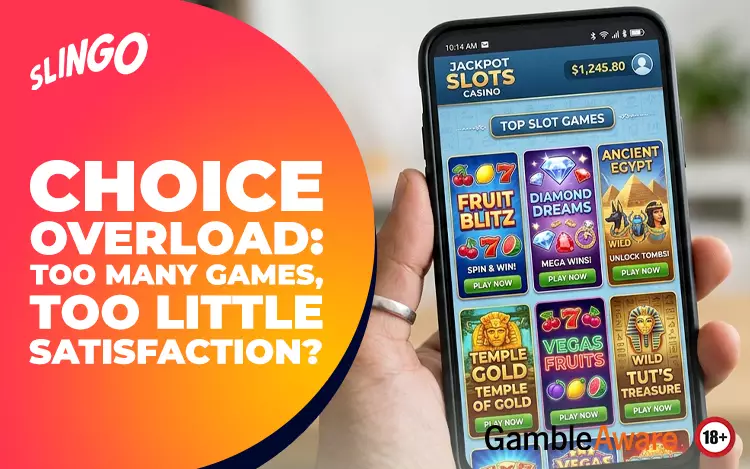
You open a game library. Scroll a bit. Then a bit more.
Everything looks good. Nothing feels quite right. That’s choice overload.
When there are too many options, the experience can shift. Instead of feeling exciting, it starts to feel… slightly draining. Whether someone is browsing online slots or flicking through different categories, more choice doesn’t always mean more enjoyment.
Sometimes, it does the opposite.
When More Stops Feeling Better
Choice sounds like a good thing. More variety. More options. More freedom.
But there’s a tipping point.
After a certain number of options, something changes:
- Decisions take longer
- Confidence drops
- Satisfaction dips
Not because the options are worse. Because there are too many of them.
The Hidden Cost of Deciding
Every decision takes a bit of energy.
Pick a game. Second guess it. Switch. Try another. Scroll again.
That cycle adds up.
By the time you actually settle on something, part of the enjoyment has already been spent on deciding.
It’s subtle. But it builds.
Why Nothing Feels Like the “Right” Choice
With too many options, the brain starts comparing.
Not just “Is this good?” but:
- “Is something better one scroll away?”
- “Did I skip a better option earlier?”
- “Should I keep looking?”
That loop makes it harder to settle.
Even a good choice can feel uncertain.
The Paradox of Variety
More variety should mean more chances to find something enjoyable.
But it can also mean:
- More comparison
- More hesitation
- Less commitment to a choice
So instead of feeling satisfied, the experience feels unfinished.
Like you haven’t quite landed.
How This Shows Up in Gameplay
This doesn’t just affect choosing a game. It carries into how sessions feel.
You might:
- Switch games more often
- Spend less time in each one
- Feel less connected to the experience
Not because the games aren’t good.
Because attention is split.
A Simpler Starting Point
Sometimes, the easiest fix is the simplest one.
Start smaller.
Instead of scanning everything, narrow it down early. A category. A style. A familiar format.
If you’re unsure where to begin, How to Choose the Best Online Slots for Real Money offers a structured way to approach selection without overthinking it.
Less searching. More settling.
Decision Fatigue Is Real
Making repeated decisions can wear down focus.
This is called decision fatigue. It doesn’t feel dramatic. Just a bit slower. A bit less clear.
Over time, it can lead to:
- Quicker, less satisfying choices
- More switching
- Less enjoyment overall
The experience becomes about deciding, not playing.
Different Formats, Different Feel
Some formats naturally feel simpler to choose from.
In bingo games, for example, the structure tends to be more straightforward. Fewer variations. Clearer flow.
That simplicity can make it easier to settle in without overthinking.
Finding a Bingo Style That Suits You
If you're exploring options, Choose Your Favourite Bingo Game breaks down how different styles work in a simple, easy-to-follow way. It helps narrow things down without adding more noise to the decision.
When Choice Starts to Feel Like Pressure
Too many options can quietly turn into pressure.
Not obvious pressure. Just a subtle feeling of needing to “pick well.”
That can make the experience feel heavier than it needs to be.
Instead of:
“I’ll try this.”
It becomes:
“What’s the best option here?”
That shift changes everything.
Keeping It Light
One way to reset this is to remove the idea of a “perfect choice.”
There isn’t one.
There’s just:
- What feels interesting right now
- What feels easy to start
- What you’re curious about in the moment
That’s enough.
Understanding Game Differences Without Overload
Part of the overwhelm comes from not knowing how different formats compare.
Slots, bingo, hybrid games, they all feel slightly different.
If you want a clearer, side-by-side view, Slingo vs Slots vs Bingo: Which Has the Simplest Learning Curve? explains how each format works in a way that makes comparison easier.
Clarity reduces hesitation.
Why Switching Too Often Breaks Flow
Constantly switching games can interrupt the experience.
Each new game requires:
- Reorientation
- Understanding the layout
- Adjusting to pacing
That resets your focus every time.
Staying with one game a little longer often feels smoother, even if it’s not perfect.
A Quick Reality Check
No matter how many options are available, one thing stays the same:
Results are determined by a Random Number Generator (RNG). Outcomes are based on chance only.
So:
- One game isn’t “due”
- Another isn’t “better timed”
- Switching doesn’t change outcomes
Choice affects experience. Not results.
Where Awareness Helps
Recognising choice overload makes it easier to manage.
You don’t need to reduce options completely. Just approach them differently.
For example:
- Set a time limit for choosing
- Pick from a smaller group
- Return to familiar options
Small shifts. Big difference.
Keeping Things Balanced
This is where responsible gambling connects naturally.
Not as a rule. More as awareness.
When decision-making starts to feel tiring or rushed, it’s a signal to slow things down.
Balance isn’t just about time or spend. It’s also about how the experience feels.
A Different Way to Approach Choice
Instead of asking:
“What’s the best option?”
Try:
“What feels easy to start right now?”
That question removes pressure.
It makes the experience lighter again.
Where Slingo Fits In
Some formats sit in the middle. Not too complex. Not too simple.
Slingo is one of those.
It blends elements in a way that feels familiar quickly, without too much setup or decision-making.
That can make it easier to jump in without overthinking.
Keeping the Experience Enjoyable
Games are meant to feel easy to get into.
If choosing starts to feel like work, something’s off.
Simplify the start. Trust the moment. Let the experience unfold without trying to optimise it.
And when it clicks, it just flows, maybe even into another round of Slingo.
Slingo Tip: If you’ve been scrolling for a while, pick the next thing that looks decent and start. Momentum matters more than perfection.
Slingo Tip: Too many choices? Narrow it down to three options and pick one. Simple beats perfect.
FAQs
What is choice overload?
It’s when too many options make decisions harder and less satisfying.
Does more choice improve gameplay?
Not always. Too many options can reduce enjoyment.
Why do I keep switching games?
Because too many options can make it hard to settle on one.
Does switching games affect outcomes?
No. Outcomes are determined by RNG and are based on chance only.
How can I reduce choice overload?
Limit options, choose quickly, and focus on what feels comfortable.