Published: 13 Oct 2026 | Updated: 20 Oct 2026


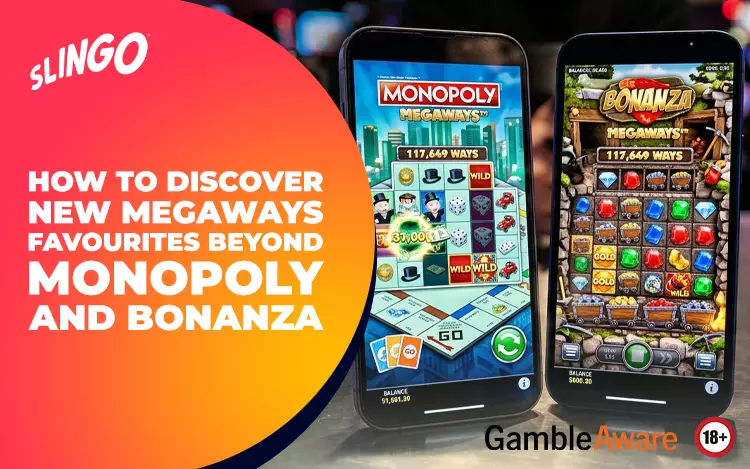

Some Megaways slots are hard to miss. Big names, familiar themes, and constant visibility make them the first stop for many players.
But once you’ve seen those, the rest of the library starts to open up.
There’s a wide range of games beyond the most recognisable titles. Many of them feel different in pace, layout, and how features are presented.
If you’ve already browsed online slots, you’ll know how quickly variety builds up. The trick isn’t finding more games. It’s knowing how to explore them without getting stuck on the same few options.
*Terms and conditions apply.*
Why It’s Easy to Stay With Familiar Games
Well-known Megaways titles are easy to return to.
They’re:
- Easy to recognise
- Often featured prominently
- Familiar in how they feel
That familiarity can make it harder to branch out, even when there are other options that might suit you better.
What Changes When You Explore Beyond Them
Once you move past the biggest names, you start to notice variation.
Different Megaways games can feel:
- Slower or faster
- Simpler or more layered
- More structured or more dynamic
These differences are often easier to spot when you’re not comparing everything to one familiar title.
Start With How the Game Feels
The easiest way to discover new favourites is to focus on feel, not name.
When trying a new Megaways game, ask:
- Can I follow what’s happening?
- Does the pace feel comfortable?
- Are features easy to recognise?
If the answer is yes, you’re already on the right track.
Look Beyond the First Row of Games
When browsing, it’s common to stick to the first few options you see.
Instead, try:
- Scrolling further down the page
- Opening games you don’t recognise
- Ignoring theme and focusing on layout
This small shift often leads to more varied experiences.
Understanding Why Big Names Stand Out
There’s a reason certain titles dominate attention.
Looking at Popular Comparisons
Monopoly Megaways vs Bonanza Megaways: Which Wins for UK Players? explores how well-known games are compared and why they remain so visible.
They’re familiar, but they don’t define the entire Megaways experience.
Comparing Different Styles of Megaways
Once you move beyond the biggest names, comparisons become more interesting.
Seeing How Games Differ
Comparing Rick and Morty Megaways with Other Megaways Slots shows how different themes and feature styles can change how a game feels.
This kind of comparison helps you recognise what you prefer.
Exploring Different Providers
Megaways games come from a range of developers.
Each one approaches the mechanic slightly differently.
Understanding Provider Influence
Top Software Providers Offering Megaways Slots explains how different developers shape pacing, visuals, and feature design.
Exploring different providers can introduce you to styles you might not expect.
Use Slingo to Broaden Your View
Looking at different formats can make Megaways easier to understand.
A Different Structure to Compare
Browsing megaways slots shows how Slingo uses a fixed grid instead of changing reels.
That contrast can help you recognise which Megaways games feel more structured and easier to follow.
Recognising Familiar Patterns
Even when exploring new games, some patterns stay the same.
A Gradual Build
In formats like bingo games, outcomes build steadily over time.
Megaways compresses that progression into a single spin, but the idea is similar.
Recognising this helps you adapt to new games more quickly.
Try Games in Demo Mode First
Demo mode is one of the simplest ways to explore new options.
It allows you to:
- Test different games quickly
- Compare pacing
- Understand feature behaviour
You don’t need to commit to anything. You can just explore.
Focus on Layout, Not Theme
Themes can draw attention, but they don’t define how a game plays.
Two games can look completely different but feel very similar.
Instead, focus on:
- Reel clarity
- Feature timing
- Overall pace
That tells you more than visuals alone.
What Doesn’t Change Across Games
No matter how many Megaways slots you try, one thing stays consistent.
Results are determined by a Random Number Generator. Outcomes are based on chance only.
Changing games, themes, or features does not affect how results are generated.
Each spin is independent.
Avoid the “Same Game Loop”
It’s easy to fall into a pattern of returning to the same titles.
Breaking that loop helps you discover:
- New pacing styles
- Different feature behaviour
- Layouts that feel easier to follow
Even trying one new game per session can make a difference.
Let Your Preferences Evolve
The more you explore, the clearer your preferences become.
You might find that you prefer:
- Slower, more structured games
- Faster, more dynamic ones
- Games with simpler features
These preferences develop naturally over time.
Keep the Experience Light
There’s no need to explore everything at once.
A few new games per session is enough.
That keeps the process relaxed and avoids overload.
Bringing It All Together
Discovering new Megaways favourites isn’t about finding hidden titles. It’s about changing how you explore.
Look beyond the first few games. Focus on feel, not name. Try different styles and providers.
That approach opens up far more variety than sticking to familiar options.
From there, it’s easy to keep exploring or switch to formats like Slingo when you want a different pace.
Slingo Tip: Try one new Megaways game each session. It’s the easiest way to find something that suits you.
Slingo Tip: If a game feels familiar too quickly, explore something different. Variety helps you learn faster.
FAQs
Why should I try Megaways games beyond big names?
Because lesser-known games can offer different pacing and simpler layouts.
How do I find new Megaways favourites?
Explore beyond the first page, use demo mode, and focus on how games feel.
Are all Megaways games similar?
They share a core mechanic but differ in features, pacing, and presentation.
Should I choose games based on theme?
Theme can help, but layout and pacing are more important.
Do different Megaways games affect outcomes?
No. Outcomes are determined by RNG and are based on chance only.